Sponsors: 10 neighborhood organizations representing all parts of the District 8 are participating.
Bernal Cut Neighborhood Alliance
Cole Valley Improvement Association
Corbett Heights Neighbors
Dolores Heights Improvement Club
Duboce Triangle Neighborhood Association
Eureka Valley Neighborhood Association
Friends of Noe
Valley
Glen Park Association
Mount Olympus Neighbors Association
Upper Noe Neighbors
Candidates and qualifications: All five major candidates to participate. A candidate must be polling with at least 5% of first-choice votes in ranked voting in the next San Francisco Chronicle poll.
No endorsement policy:The forum is strictly a non-partisan, public education forum, organized by neighborhood groups. No sponsoring organization endorses any of the mayoral candidates.
Corona Heights Special Use District (SUD) Potential Change
The Corona Heights Special Use District (CHSUD), in use since 2017, to prevent the rise of “monster homes,” may be coming to an end.
Earlier this month, Supervisor Mandelman announced plans to extend restrictions on “monster homes” throughout District 8 (including in our neighborhood). In doing so, he proposes that the Central Large Neighborhoods SUD (CLNSUD) replace the Corona Heights SUD.
The SUDs are very similar, though according to Calvin Ho, Legislative Aide to Supervisor Mandelman, the CLN SUD is slightly more restrictive. The CHN SUD allows an expansion of a property by up to 75% instead of a 1:1.2 floor area ratio allowed by the CLN
SUD.
The decision was reached during discussions with the Planning Department and City Attorney’s office. Calvin Ho attended the June 5th Corbett Heights Neighborhood Board meeting to explain the proposal. He noted that the Supervisor wanted to make the district “more uniform” and reiterated that, while the language between the two SUDs is similar, the new SUD would be stronger than our current one.
If you have further questions
or comments on the matter, we encourage you to attend the Annual General Membership Meeting on Monday September 30 at the Castro Community Room at 501 Castro Street at 18th. Supervisor Mandelman will speak and will field questions.
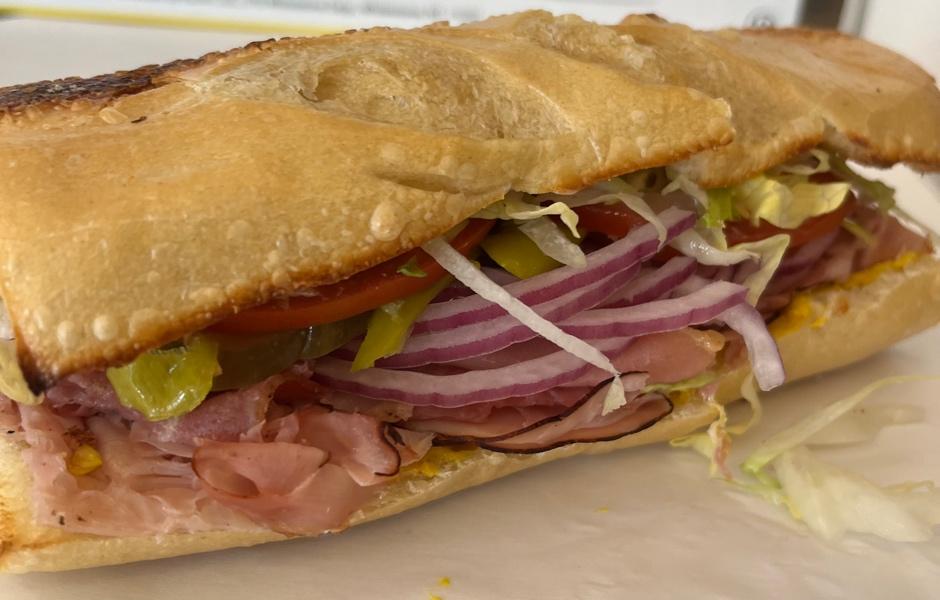
Corona Heights Market and Deli: Open Again!
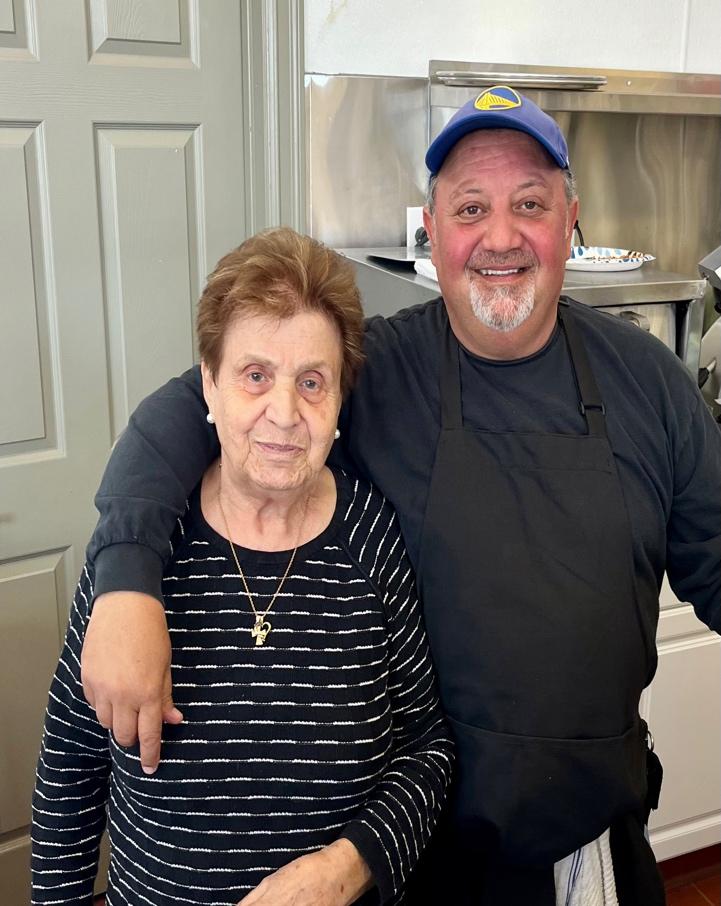
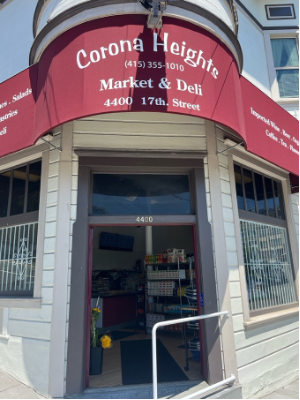
After being closed for more than a decade, the Corona Heights Deli at 17th & Temple is back in business. Still owned by the Saba family, the
store is helmed by Rosette Saba and her son, Mike. Both live in the neighborhood and spent years trying to reopen the store as they dealt with family tragedies and permit challenges.
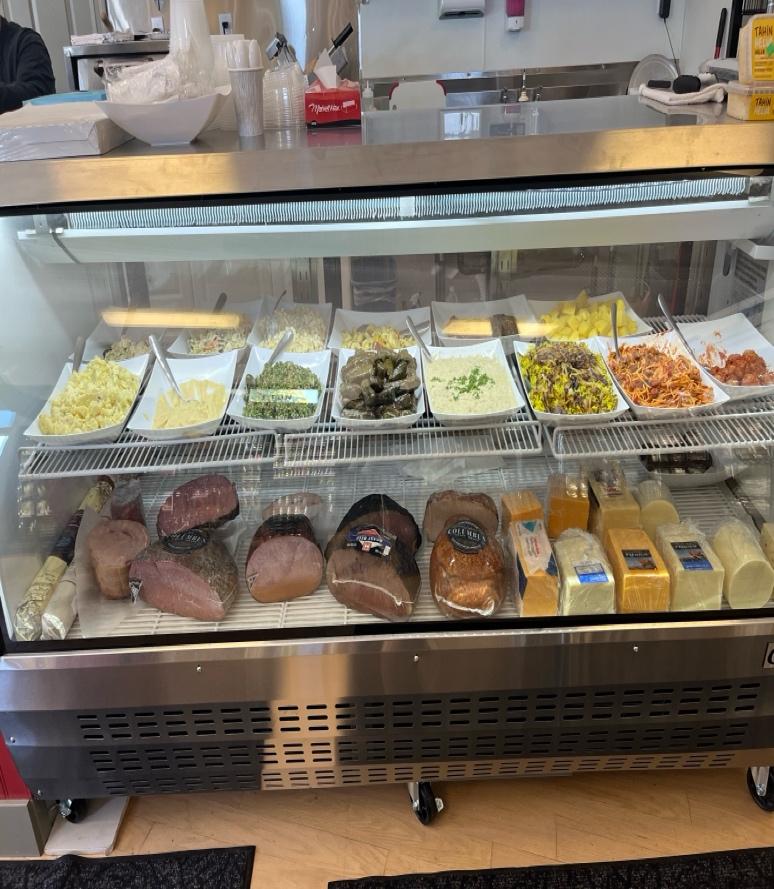
The store officially reopened on Tuesday, June 18th and features a fully stocked deli with many homemade items. It is now open 6 days a week (closed on Sundays) and is in the process of adding vegan options and alcohol.
"The neighborhood has been so nice to us,"
said Mike. "We're so happy to be back."
126-128 Ord Street
In 1890, the Streets Committee of the Board of Supervisors first began discussion of opening a tunnel and road from 17th and Castro westward. It was not until 1914 a plan was approved beginning with the construction of the Twin Peaks Tunnel, which was completed in 1917. Market Street was subsequently widened twice. The first widening
was completed in 1922; the second widening in 1957-1958. All three construction projects necessitated demolition or moving of houses. The affected houses in our neighborhood were near the entrance to 17th at Castro, the first blocks of Collingwood, Diamond, Eureka, Douglass, Ord, Merritt, and Danvers. Some streets were expunged. Falcon became a portion of Market; Merritt was greatly reduced and became part of the first Market Street extension; the 1950s
extension required additional house removals on Market Street near the Slope and south of Al’s Park. Eighteenth Street once crossed through Al’s Park to Corbett. All the houses on the south side of Merritt (now the 3000 block of Market) were moved back twenty feet. Below, we track the movement of one of those houses that was moved from 17th and Castro to Ord and Corbett.
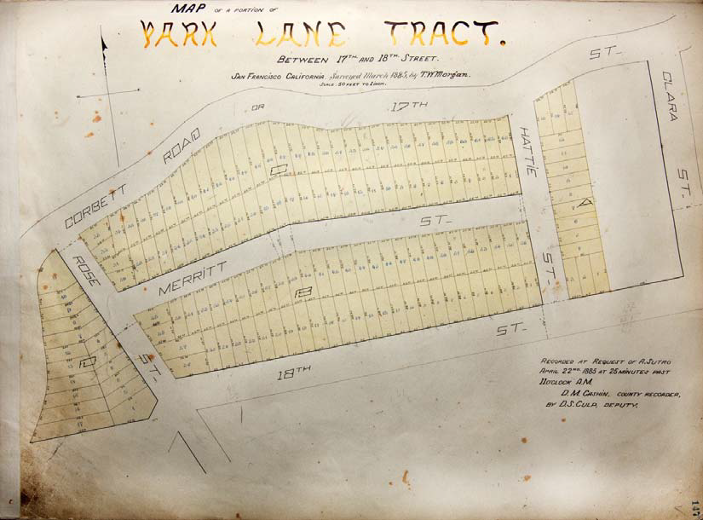
1885 Prior to the Tunnel and Market Street Extensions (Note: Clara is now Ord; Rose is now Danvers)
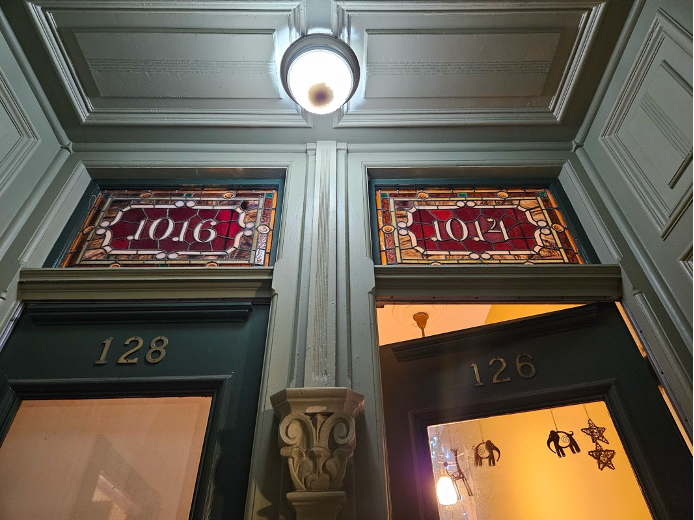
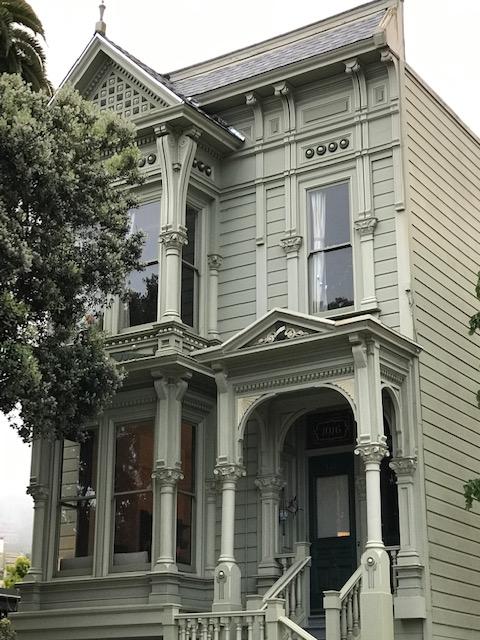
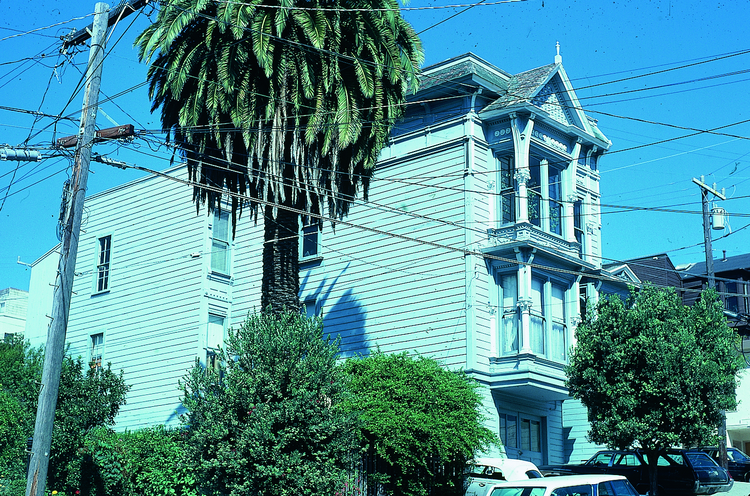
The transoms lights at 126-128 Ord Street indicate that the house came from somewhere else. It has long been known that this house was moved
to its current location, but the mystery has been from what location. Local folklore asserts that this house, based upon the numbers in transom lights, once stood at 1014-1016 17th Street at Pennsylvania, under what is now Interstate 280. This is not correct. Perhaps the lights originated there, but not the house.
Transom Lights at 126-128 Ord Street, 2024
We believe the leaded windows are period, but a decade later than the Italianate house and not original to the house, leading to an incorrect assumption that the structure came from a street with the addresses of 1014 and 1016. This incorrect information is cited in the Corbett Heights Context
Statement, published by CHN in 2017: “Among houses moved for unknown reasons, 126-128 Ord Street was moved from 1018 [sic] Seventeenth Street (as shown in the transom glass) in 1894” (page 76). In fact, as shown in the 1908 photograph below, the land the house now occupies was an empty lot.
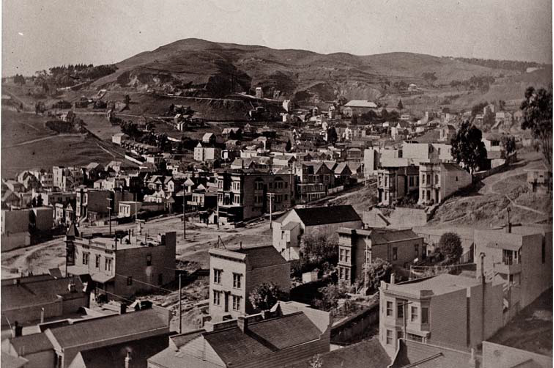
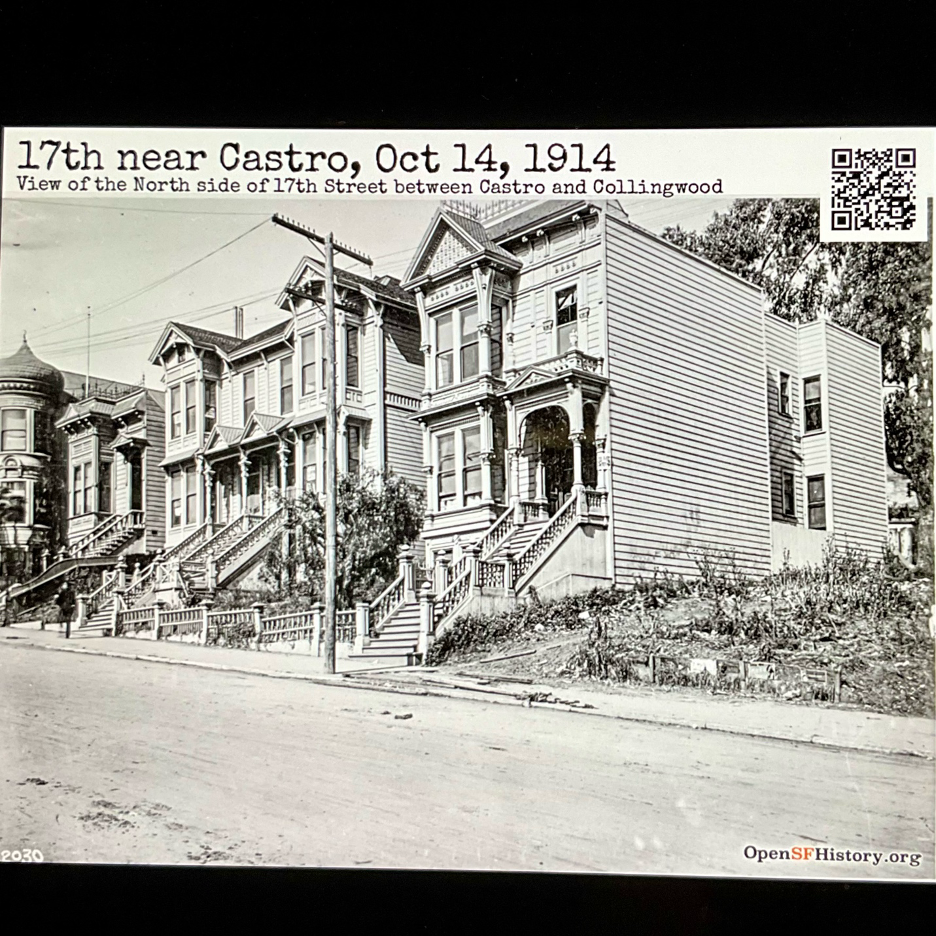
The recently discovered photograph below shows the house in its original location in 1914 just before its relocation. At the top of the photograph you will see the distinctive house with an “onion dome” (4040-4042 17th Street), home of neighborhood activist Judith Hoyem who initiated Article 10 Landmark designation for it in 1999. East of that house, which also also survived the 1914 Twin
Peaks Tunnel Project is 4038. Judith organized and lead an ultimately successful years-long neighborhood effort to prevent its demolition. The next building is a double dwelling/flat addressed as 4030-4036. In 1914 newspapers, 4034 17th Street advertised as 8 rooms to let for up to 12 boarders (San Francisco Examiner, November 15, 1915).
The house at bottom of that map, is 4026-4028 17th Street, now 126-128 Ord Street, the house in question.
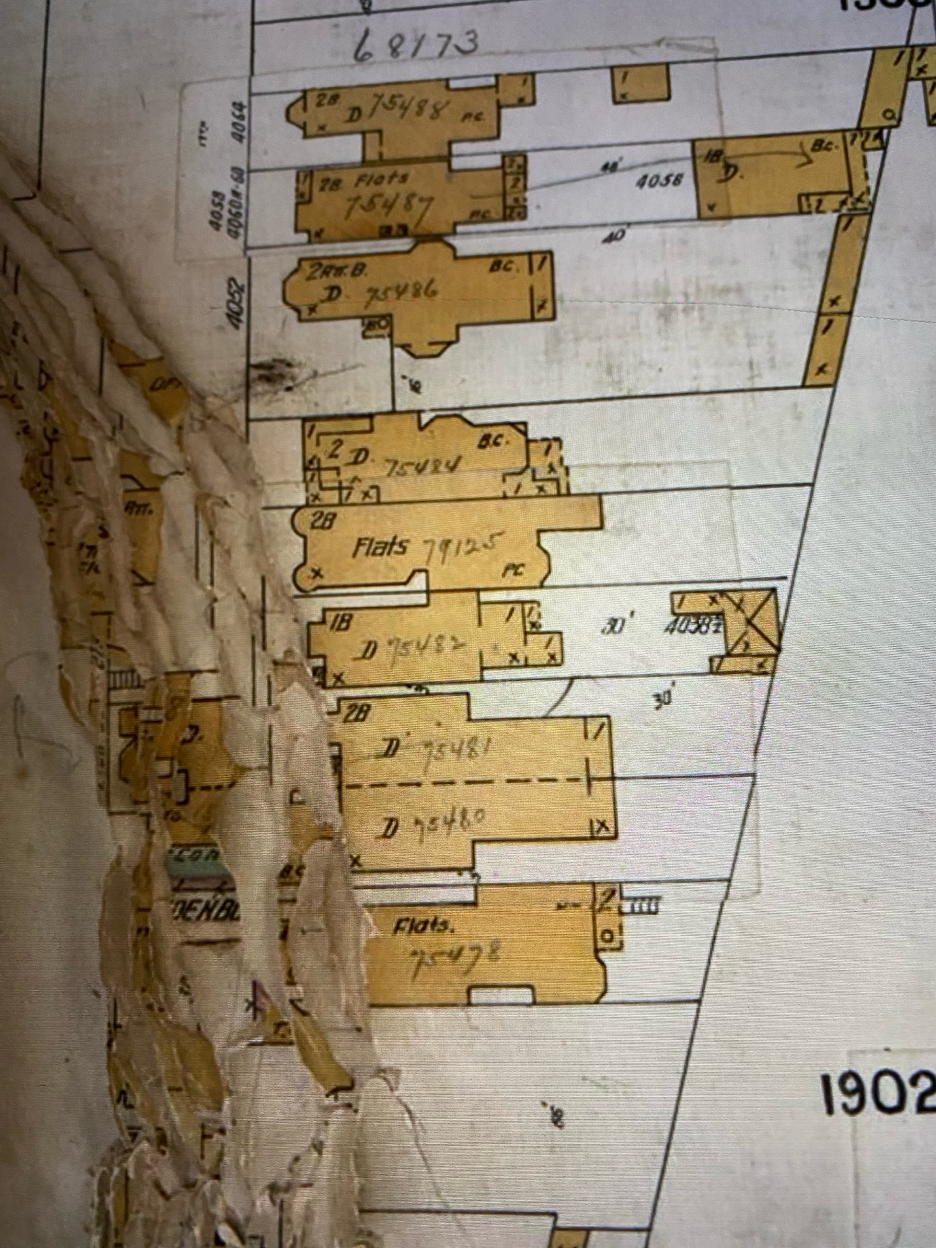
Below the photograph is a page from the1899 Sanborn map, Volume 4. Compare the photographs of the 1914 photograph, current photographs, and the outline of the building on the map, and we think you will agree.
OpenSFHistory/File No. (dpwbook 9 dpw2030) opensfhistory.org, October 14, 1914
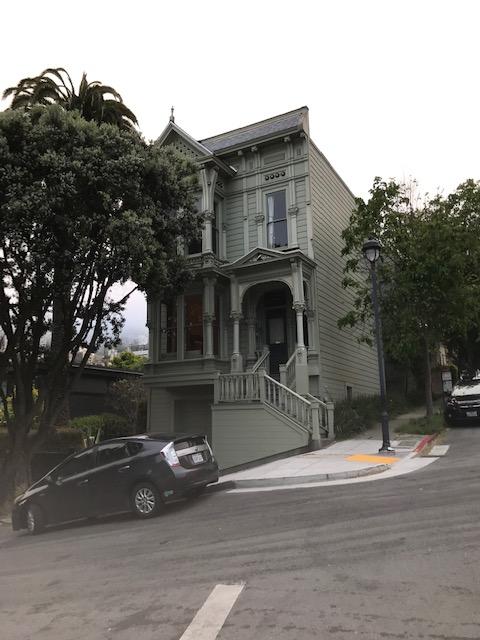
126-128 Ord Street, 2024
The house is unchanged
with the exception of the addition of garage doors at the basement level and the now missing: iron cresting, the original stairway, and the balustrade over the front entranceway.
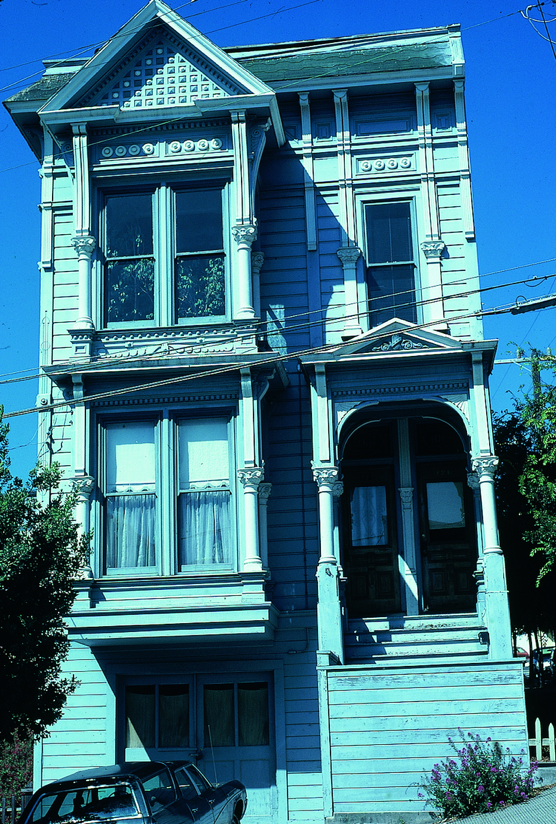
These are earlier, 1981 photographs:
Robert Cherny Collection SFSU, 1981
The 1899 Sanborn Map, Volume 4, p. 411, shows the house in its original location.
1899 Sanborn Map, Volume 4, p. 411
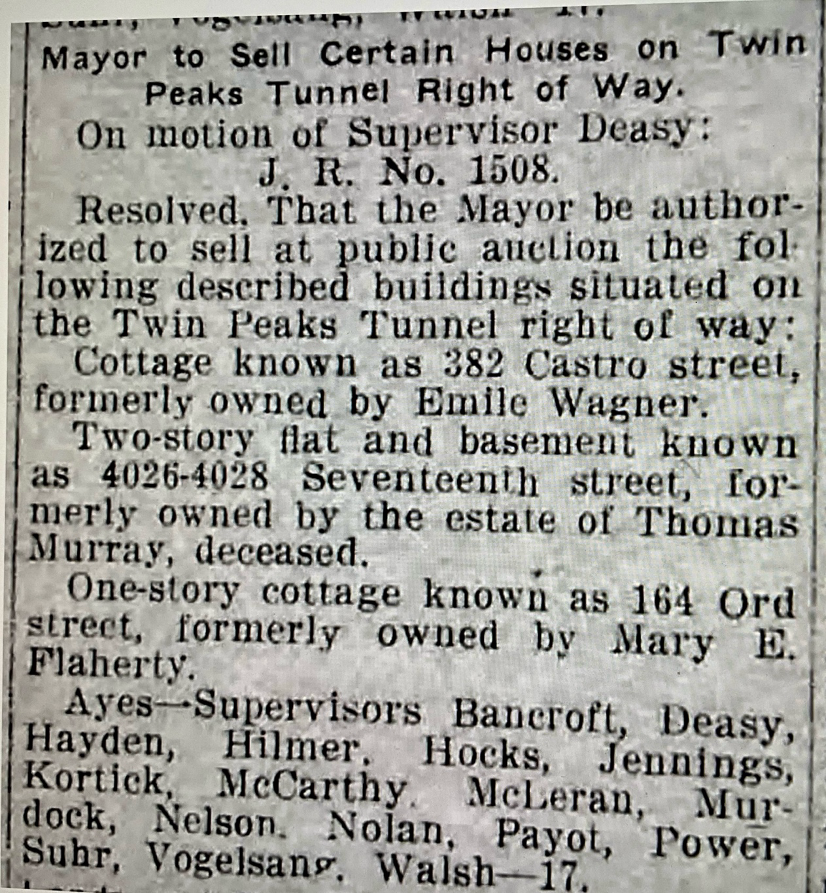
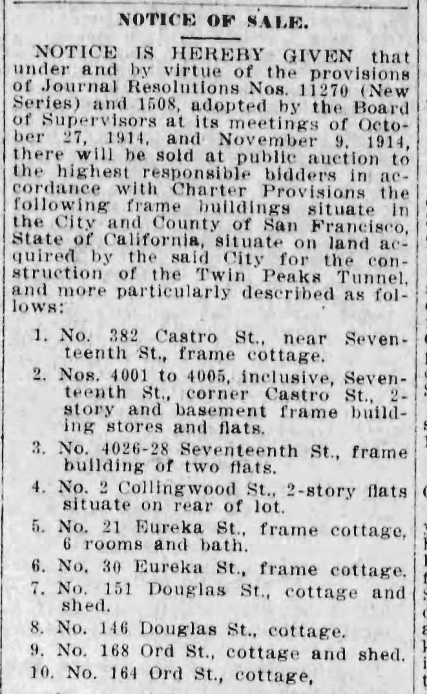
In 1914,
structures in the way of the Twin Peaks Tunnel project, were assessed a fee for the tunnel’s construction. If the assessment was not paid, the city became the owner of the property. The Mayor was authorized to sell at public action, buildings situated on the Twin Peaks Tunnel right of way. The house at 4026-2028 17th Street was sold at auction, and moved to its current location soon after.
The Recorder, November 12, 1914
San Francisco Journal and Daily Journal of Commerce, November 13, 1914
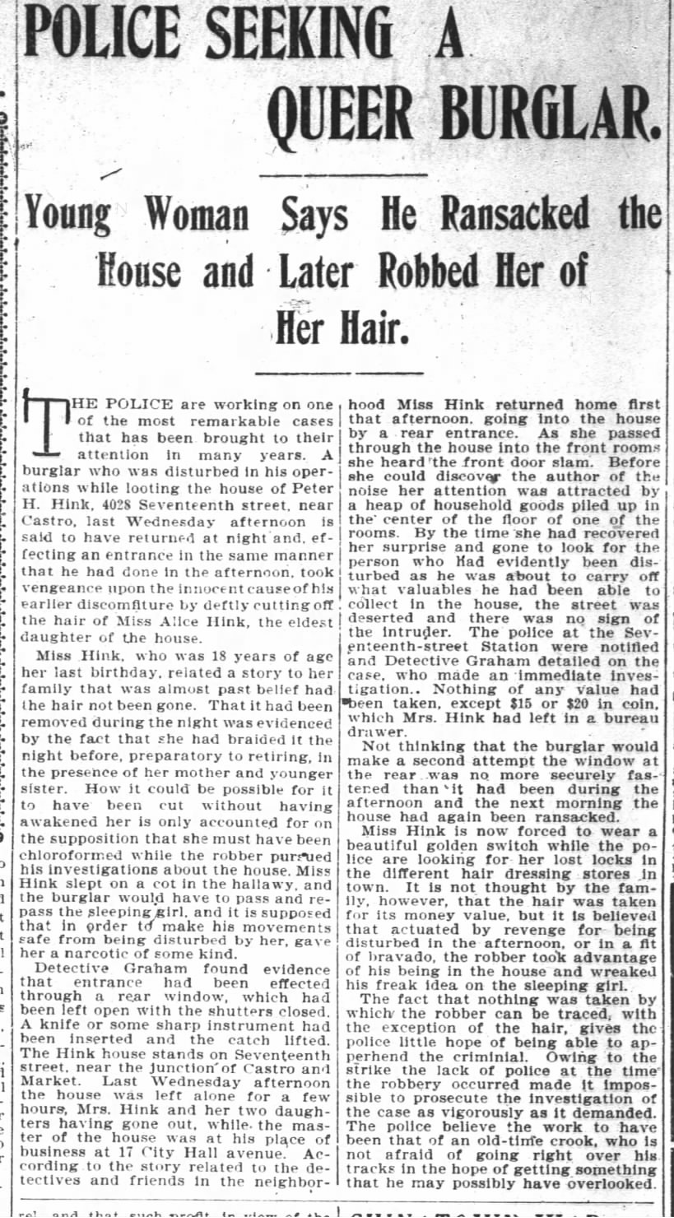
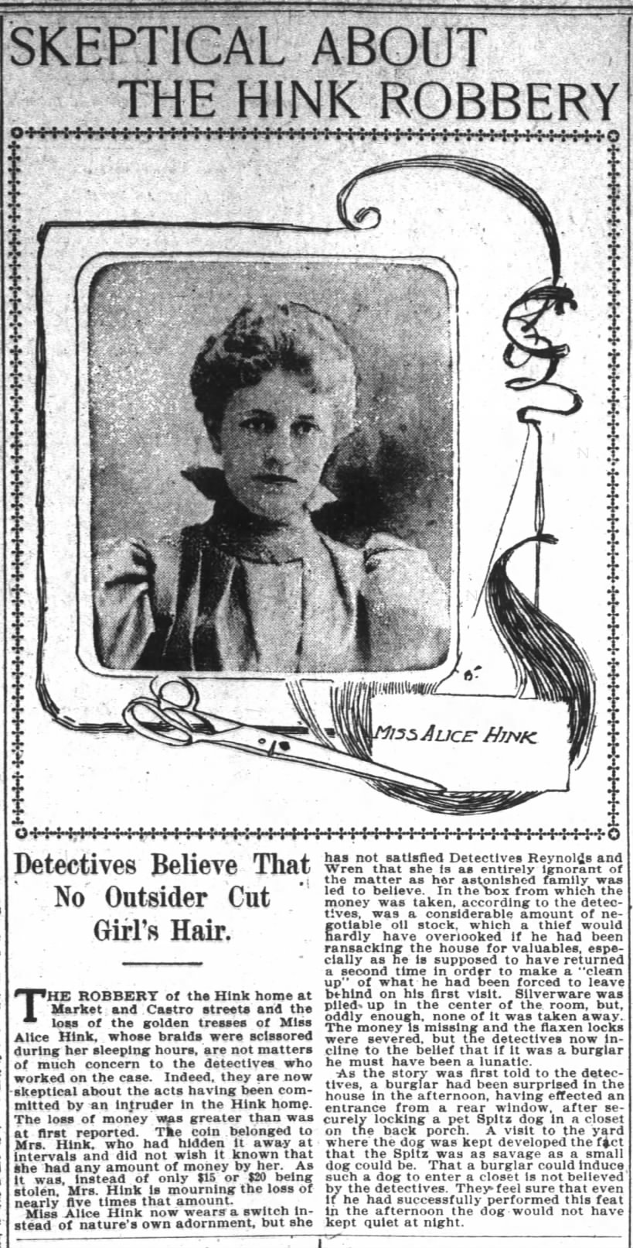
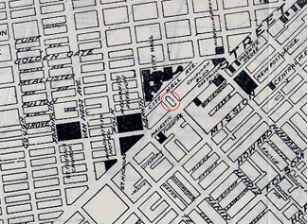
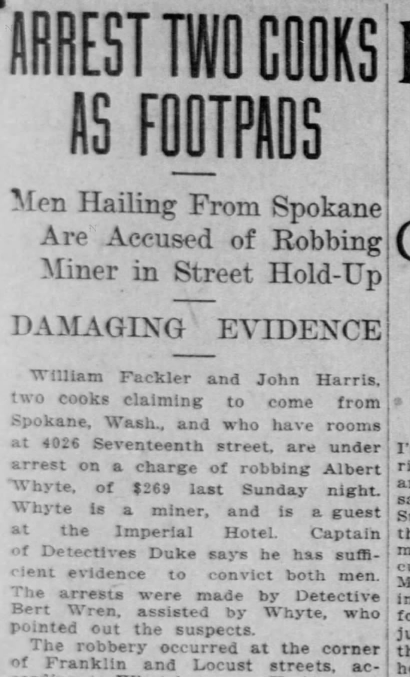
Stolen Tresses and Crooked Cooks at 4026-4028 17th Street
Interesting Tales of the Occupants of 4026-4028 17th Street
San Francisco Chronicle, October 9, 1901
San Francisco Chronicle, October 10, 1901
Hink moved to 2028 17th Street in 1899. Peter Hink ran a saloon at 17 City Hall Avenue, which was a two-block street between Larkin and Leavenworth Streets, parallel to Market Street, across from the old city hall. Hink signed a surety bond in 1882 for Ah Moon owner of Senate Cigars, a cigar manufacturing businessman
who was caught selling goods without paying a tax. Moon disappeared to parts unknown, and the saloon was attached to recover the $4500 bond, decades later. The saloon sold at auction in April 1909. Hink died the next day at age 65.